


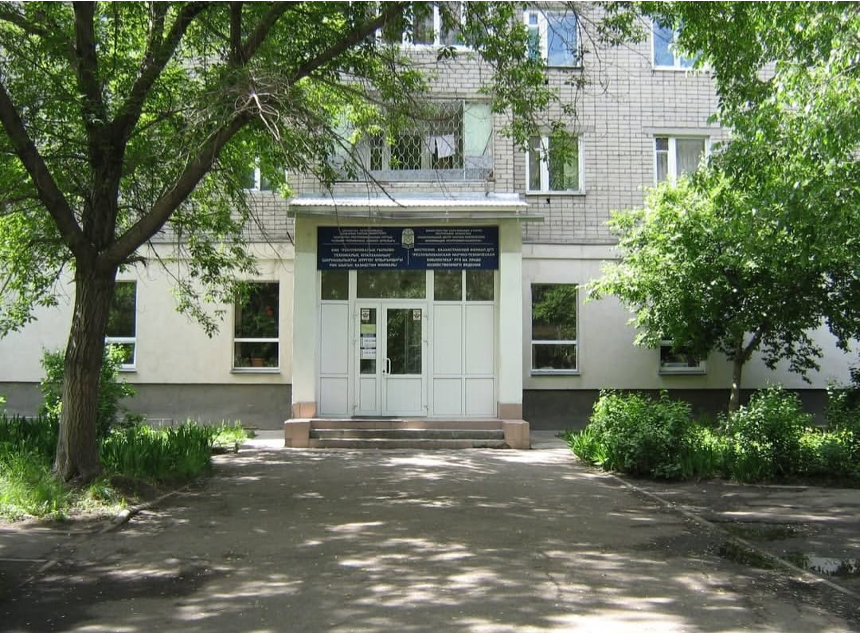
1957–1965: Foundation and Early Years of the Library
The East Kazakhstan Branch of NJSC “Republican Scientific and Technical Library” traces its origins to the technical library of the Economic Council (Sovnarkhoz) of the East Kazakhstan Economic Region. The first entry in the accession register was made on 6 August 1957, and this date is regarded as the beginning of the library’s history.
From its foundation, the library was housed in the premises of the Kazgiprotsvetmet design institute. Until 1962 it had only one member of staff; in 1962 the staff grew to three people, and by 1965 to five.
At the end of 1965 the library received a new status and a new name: East Kazakhstan Regional Scientific and Technical Library.
1965–1970s: Growth of the Collections and Expansion of Activities
In its first years under the new status, the library’s scientific and technical collection grew sevenfold. Its standing rose considerably after the department of special types of technical literature was set up and a regional patent collection was established on its basis.
The staff of the special literature department became trusted advisers to the standardisation services of the region’s enterprises, helping specialists find their way through regulatory and patent information.
In the early 1970s, Kazakhstan’s system of scientific and technical information bodies was expanded through the creation of scientific and technical information centres, which began operating on the basis of the collections of the regional scientific and technical libraries.
1979: A New Stage of Development
The management of the Republican Scientific and Technical Library and of KazNIINTI (the Kazakh Research Institute of Scientific and Technical Information) made considerable efforts to secure funding from the State Planning Committee and the regional administration for the design and construction of a dedicated building for library and information organisations.
At the end of 1979, the library and the Centre for Scientific and Technical Information moved into new premises with spacious reading rooms and a conference hall, which hosted public events, research and practice meetings and methodological seminars.
1990s: Working Through Economic Transformation
During the economic transformation of the 1990s, when enterprises were seeking new paths of development, the library actively helped them find scientific, technical and industrial information. Users were provided with materials on sunflower oil production, soap making, grain processing and other fields.
Library staff compiled information both for enterprises and for private individuals, for example on making wafer cones and shot, pizza-making technology and other activities.
After the collapse of the former system of scientific and technical information, the Republican Scientific and Technical Library and the regional scientific and technical libraries were in effect the only institutions that continued to provide scientific information support. In the new circumstances, the libraries looked for ways to replenish their collections and raised extra-budgetary funds to serve their users.
In the second half of the 1990s, a mechanism was developed for concluding contracts for library and information services to corporate users.
The Present Day: Digitalisation and the Development of Information Resources
As the economy of independent Kazakhstan developed, enterprises gradually strengthened their positions, new industries emerged and the demand for up-to-date scientific and technical information grew.
Over time, new library and information technologies began to complement traditional forms of work. The library’s reference and search tools were supplemented by the branch’s electronic catalogue and by a union electronic catalogue covering the collections of all RSTL divisions.
Today the East Kazakhstan Branch of NJSC “RSTL” holds a rich collection of scientific and technical documents in print and electronic formats. The library provides access to the resources of the largest libraries and information centres of Kazakhstan and Russia and contributes to information support for science, industry, education and innovation.
Continuing its long-standing traditions, the library remains an important regional centre of scientific and technical information, supporting the development of the region’s economy, science and vocational education.